5 Bible verses supporting Jehovah’s Witnesses blood doctrine
Article By: Old Harbour News
-

- Nov 07, 2026 07:50 AM | Religion
-
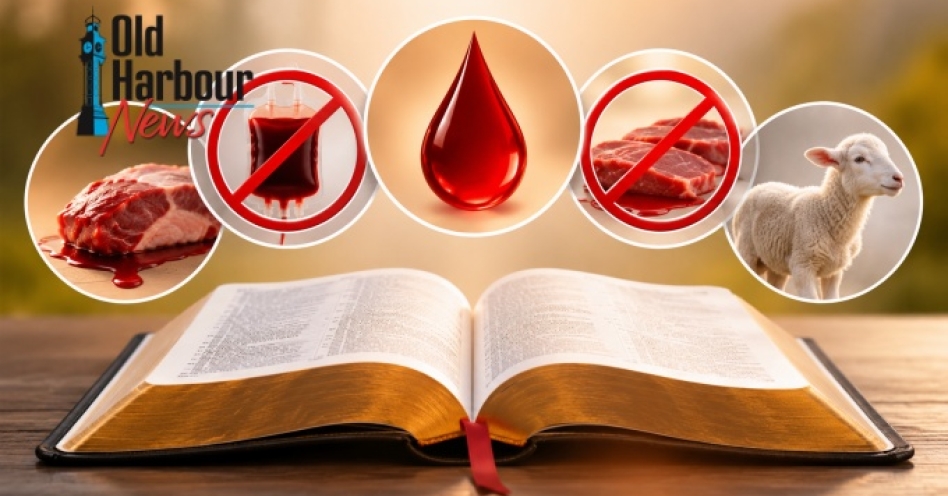
The organisation interprets these instructions as applying not only to consuming blood as food but also to receiving blood through medical transfusions.
Five key scriptures supporting the blood doctrine
1. Genesis 9:4 — God's command to Noah
"But flesh with the life thereof, which is the blood thereof, shall ye not eat."
— King James Version (KJV)
Jehovah’s Witnesses’ interpretation: God instructed Noah not to consume blood after the Flood. Because the command was given before the establishment of the Mosaic Law, Jehovah’s Witnesses regard it as a universal principle applying to all humanity.
2. Leviticus 17:10–14 — The life is in the blood
Verse 14 states:
"For it is the life of all flesh; the blood of it is for the life thereof..."
— KJV
Jehovah’s Witnesses’ interpretation: Blood represents life, which belongs to God. Therefore, they believe humans must respect its sacredness and avoid using it in ways they consider contrary to God's instructions.
3. Acts 15:28–29 — Abstain from blood
Verse 29 states:
"That ye abstain from meats offered to idols, and from blood, and from things strangled, and from fornication..."
— KJV
Jehovah’s Witnesses’ interpretation: This is arguably the most important scripture supporting their blood doctrine.
The instruction was issued by the apostles and elders in Jerusalem to early Christian congregations.
Jehovah’s Witnesses maintain that the command to abstain from blood remains binding on Christians today and extends beyond dietary restrictions to medical transfusions.
4. Acts 15:19–20 — Instructions to Gentile believers
Verse 20 states:
"But that we write unto them, that they abstain from pollutions of idols, and from fornication, and from things strangled, and from blood."
— KJV
Jehovah’s Witnesses’ interpretation: This passage reinforces their belief that abstaining from blood was a requirement for Christians, including those who were not Jewish.
5. Acts 21:25 — Reaffirmation of the blood prohibition
"As touching the Gentiles which believe, we have written and concluded that they observe no such thing, save only that they keep themselves from things offered to idols, and from blood, and from strangled, and from fornication."
— KJV
Jehovah’s Witnesses’ interpretation: This passage reiterates the instructions given in Acts 15 and is used to argue that the prohibition continued to apply to Christian believers.
6. Deuteronomy 12:23 — Blood represents life
"Only be sure that thou eat not the blood: for the blood is the life; and thou mayest not eat the life with the flesh."
— KJV
Jehovah’s Witnesses’ interpretation: This reinforces the principle that blood is sacred and should not be consumed. Their official explanation specifically cites this passage as support for the blood doctrine.
An important distinction: What does the Bible actually prohibit?
None of these scriptures explicitly mentions blood transfusions. They were written long before modern transfusion procedures existed.
Jehovah’s Witnesses historically interpreted the biblical prohibition against eating or consuming blood as extending to receiving blood through a vein.
Other Christian interpreters disagree, arguing that eating blood and receiving a medical transfusion are fundamentally different activities.
What changed in September 2026?
On September 18, 2026, the Governing Body announced that Jehovah’s Witnesses could make individual decisions about accepting the four primary blood components: red cells, white cells, plasma and platelets.
The organisation still prohibits whole-blood transfusions, citing Acts 15:20. It also referenced 1 Corinthians 4:6, concerning not going beyond what is written, in explaining why decisions about blood components should be left to individual conscience.
If the scriptures never explicitly prohibited medical blood transfusions, was the original doctrine a direct command from God or a human interpretation of biblical principles?
That distinction is central to understanding the controversy surrounding the organisation's historic policy change.