Cabo Verde 0–0 stunner against Spain forces respect and a rename revelation
Article By: Old Harbour News
-

- Jun 15, 2026 04:33 PM | International
-
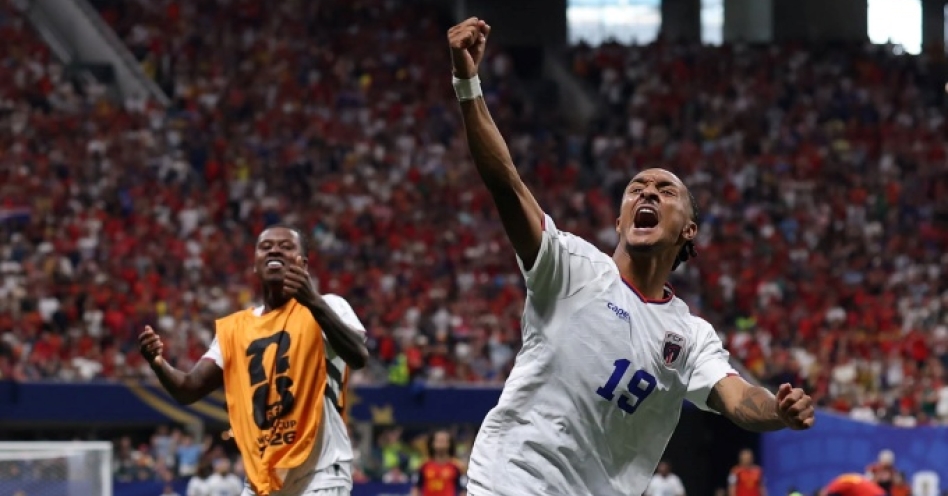
Cabo Verde players Dailon Livramento and Sidny Cabral celebrate after a stunning draw against Spain in their Group H match of the 2026 FIFA World Cup. (Credit: fifa.com)
Against all odds – the pre-match spread had Spain as overwhelming favourites going up against the Blue Sharks, ranked 64th in the world, defended with their lives. Goalkeeper Vozinha, 40, made several outstanding saves, including two just before the half-time break against Ferran Torres and Aymeric Laporte. Spain walked off the pitch in disbelief at the end of the final whistle. Cabo Verde walked off into a global spotlight never imagine before.
But the result has triggered a global conversation that extends far beyond sport. For millions watching, this was the first time they saw “Cabo Verde” on a FIFA graphic. Many wondered: Didn’t they used to be called Cape Verde? And why change just before the World Cup?
‘A Name is an Identity’
The answer lies in a quiet but determined campaign that began years ago. FIFA quietly confirmed last month that the country would now officially be referred to as Cabo Verde – the native Portuguese name – rather than the English translation “Cape Verde”. The decision came at the formal request of the country’s government and football federation.
“This is not political correctness,” said Carlos Veiga, former prime minister of Cabo Verde, from the stands in Barcelona after the match. “It is decency. For centuries, colonial languages renamed us. Now, when we stand on the world’s biggest stage, we stand with our own voice. ‘Cabo Verde’ is the real name. The world must learn it.”
FIFA confirmed the change had been applied across all official communications, commentary guidelines, and tournament branding. The move was widely praised in Lusophone Africa but barely noticed outside the archipelago – until today.
‘Millions Did Not Know About Us’
Before qualifying, most people could not place the country on a map. A volcanic archipelago off West Africa, population roughly 560,000, the nation of Cabo Verde is smaller than many European cities. It had never qualified for a World Cup before now. Tourism officials joked privately that they were grateful for any mention at all – even if people said “Cape something”.
But the overnight fame from the Spain draw has turned the name change into a sudden geopolitical headline.
“Everyone is talking about us,” said Dina Lopes, 34, a street vendor in the capital Praia. “But we want them to say ‘Cabo Verde.’ Not ‘Cape’. Not ‘Cabo something’. We earned this. We earned our name.”
‘A Silent Political Statement’
Linguists and postcolonial scholars were quick to weigh in.
The shift from ‘Cape Verde’ to ‘Cabo Verde’ is part of a wider reclamation of identity, scholars contend. By making the change before the World Cup, the country ensured that the name would be spoken billions of times over this tournament. That is clever diplomacy, and a quiet act of sovereignty, was the view of historians in Portugal and Cabo Verde.
Even Spanish coach Luis de la Fuente, visibly frustrated after the match, acknowledge the name in the post-match press conference.
“[Cabo Verde] were a very physically strong team. We knew they were going to set up with a very low block and with very powerful players. If you add to that the fact that we lacked freshness, then this happens. Football is like that — there are no small opponents here."
What This Means for the Tournament
The draw throws Group H wide open. Spain still face Uruguay and Saudi Arabia. Cabo Verde face Uruguay next – a match now viewed with terrified respect by the South Americans. Bookmakers have slashed the odds on the Blue Sharks reaching the knockout stage.
But for the people of Cabo Verde, the result against Spain was already a victory. And so was the name on the scoresheet.
The world saw Cabo Verde draw 0–0 with Spain. No asterisk. No translation. Now everyone knows their name.
FACT BOX: WHY THE NAME CHANGE MATTERS
- Cape Verde is the English translation of the Portuguese Cabo Verde (“Green Cape”).
- The country gained independence from Portugal in 1975 but the English exonym persisted in FIFA until 2026.
- Cabo Verde’s UN membership, constitution, and passports have always used the Portuguese name.
- FIFA confirmed the switch after formal petition in 2025, just months before World Cup qualification was sealed.
Next match: Cabo Verde vs. Uruguay – Sunday, 5 PM Jamaica time. The world will be watching. And spelling it right.