Russian foreign minister warns against western dominance, calls for new global economic order
Article By: Old Harbour News
-

- Nov 10, 2026 09:20 AM | International
-
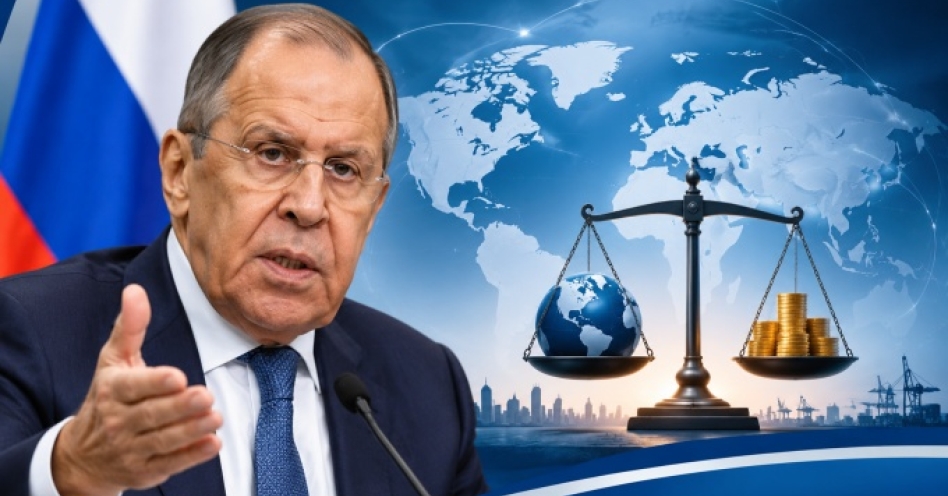
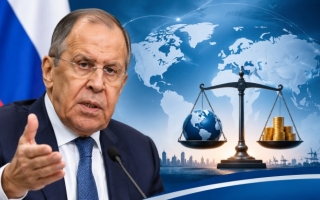
Sergey Lavrov accuses Western powers of weaponising international trade, energy supplies and financial systems while advocating a more inclusive global economic order that gives developing nations greater influence.
In an extensive commentary published on November 10, 2026, in the Russian newspaper Kommersant, Lavrov argued that the international economic system must undergo fundamental reforms to ensure greater fairness, sovereignty and representation for developing countries.
Writing under the title The Future Belongs to the Democratisation of International Economic Relations, the veteran Russian diplomat maintained that global economic cooperation has increasingly become an instrument of geopolitical confrontation rather than a mechanism for shared prosperity.
His remarks followed a meeting of foreign ministers from the Group of Twenty (G20) in the United States, where discussions centred on the relationship between international economic stability and global security.
Western Economic Policies Under Fire
Lavrov accused Western governments of employing sanctions, trade restrictions, financial mechanisms and control over strategic resources to weaken geopolitical competitors.
He argued that the emergence of new economic powers across Asia, Africa and Latin America has challenged the traditional dominance of Western institutions, prompting efforts to restrict their influence.
According to the Russian foreign minister, these policies reflect an outdated approach to international relations that prevents developing economies from exercising influence proportionate to their growing economic importance.
He further accused Western countries of undermining the very globalisation framework they had championed for decades, resulting in fragmented international markets, disrupted supply chains and growing economic uncertainty.
Lavrov also reiterated Moscow's position on the war in Ukraine, alleging that Western governments had deliberately engineered the confrontation to weaken Russia.
Those accusations reflect the Russian government's interpretation of the conflict and remain strongly disputed by Ukraine and its Western allies, which maintain that Russia's invasion violated Ukrainian sovereignty and international law.
Energy Security and the Caribbean
Of particular relevance to Caribbean nations was Lavrov's warning about the growing militarisation of international waterways and the consequences of geopolitical tensions for global energy security.
He argued that freedom of navigation must be respected universally, explicitly including the Caribbean Sea alongside the Red Sea, the Baltic, the Mediterranean and other strategically important maritime regions.
Lavrov criticised what he described as attempts by NATO, the European Union and individual Western governments to exercise excessive control over international shipping routes.
He also pointed to the disruption of energy supplies, sanctions against petroleum-producing countries and geopolitical instability as major contributors to volatility in international fuel markets.
For Jamaica and other Caribbean economies heavily dependent on imported petroleum, developments affecting global oil supplies and shipping routes can have significant implications for electricity costs, transportation expenses, inflation and economic growth.
Although Lavrov did not outline a specific policy proposal for Jamaica, his commentary highlighted the broader vulnerabilities facing smaller, import-dependent economies when international trade and energy markets become entangled in geopolitical disputes.
The Russian foreign minister also rejected suggestions that Western sanctions had fundamentally weakened his country's economic position.
According to Lavrov, the European Union previously accounted for as much as 40 per cent of Russia's foreign trade before relations deteriorated following the conflict in Ukraine.
He claimed that Moscow had successfully redirected much of its commercial activity towards emerging economies, with approximately 80 per cent of Russian exports now going to markets outside the traditional Western economic bloc.
Asia, he said, accounts for approximately 70 per cent of Russian exports.
Lavrov further asserted that Russia remains a major international supplier of petroleum, natural gas, agricultural products, fertilisers and emerging digital technologies.
He maintained that sanctions have imposed substantial costs on European economies while contributing to inflationary pressures and declining living standards elsewhere.
However, his claims about Russia's economic resilience and the scale of Western economic losses were presented from Moscow's perspective and were not independently substantiated in the commentary.
Food security featured prominently in Lavrov's assessment of the international economic landscape.
He argued that hunger and food insecurity are aggravated by sanctions, trade restrictions and disruptions to international supply chains.
Citing the hundreds of millions of people experiencing hunger worldwide, the Russian foreign minister called for the removal of barriers that restrict the movement of food, fertilisers and other essential agricultural commodities.
Russia, he said, continues to supply agricultural products and fertilisers to approximately 160 countries and intends to expand cooperation with developing economies, particularly across Africa.
For Caribbean countries, including Jamaica, the reliability and affordability of imported agricultural inputs and food products remain important considerations in managing inflation and strengthening national food security.
BRICS and the Push for a Multipolar World
A central theme of Lavrov's commentary was the growing importance of BRICS and other international organisations seeking to establish alternatives to Western-dominated economic arrangements.
He said Russia is working with partners to develop independent payment systems, financial infrastructure, insurance mechanisms and trading platforms designed to reduce dependence on traditional Western institutions.
The Russian foreign minister also called for reforms to the Bretton Woods institutions, particularly the International Monetary Fund and World Bank, to give emerging and developing economies greater influence over international financial decision-making.
He argued that the existing governance arrangements no longer adequately reflect the changing distribution of economic power.
Lavrov maintained that international economic cooperation should be founded on equality, mutual respect, non-discrimination and national sovereignty.
His position reflects Moscow's broader diplomatic effort to strengthen relationships with countries across the Global South while challenging Western influence over international institutions.
Implications for Jamaica and the Caribbean
While the commentary was principally directed at the international community, the issues raised have implications for Jamaica and other small developing states.
Caribbean economies are particularly exposed to external shocks involving fuel prices, international shipping, food imports, financial markets and geopolitical instability.
A more fragmented international trading system could increase costs and uncertainty for regional businesses and consumers.
Conversely, efforts to diversify trade relationships and expand the representation of developing countries within international financial institutions could present opportunities for smaller economies seeking greater economic flexibility.
Nevertheless, proposals for alternative global financial arrangements also raise questions about institutional transparency, financial stability and the practical benefits available to participating countries.
For Jamaica, which maintains longstanding diplomatic and economic relationships with Western countries while engaging with a broader range of international partners, the changing global environment underscores the importance of protecting national interests and maintaining constructive international relationships.
A Call for Global Economic Reform
Concluding his commentary, Lavrov argued that the international community must move away from coercive economic policies and embrace a more balanced global order.
He called for open and competitive markets, predictable investment relationships and international institutions that better reflect the economic importance of emerging powers.
Russia, he indicated, would continue working through BRICS and other multilateral organisations to advance its vision of a more equitable international system.
The commentary comes against the backdrop of continuing geopolitical tensions, disputes over international sanctions and growing debate about the future of global economic governance.
For developing countries, including those in the Caribbean, the central question remains whether the emergence of a more multipolar international order will translate into greater economic opportunity, stronger institutions and a more stable global trading environment.