UN challenges Jamaican media, demands greater accountability
Article By: Old Harbour News
-

- Nov 24, 2026 01:10 PM | News
-
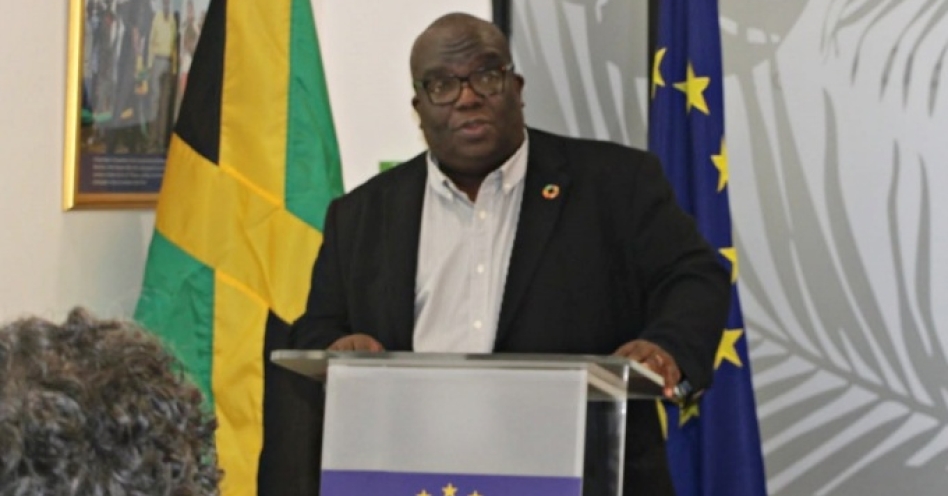
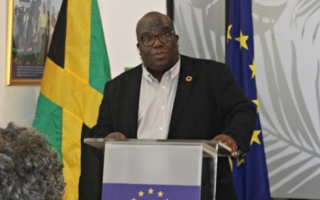
Dennis Zulu
United Nations Resident Coordinator Dennis Zulu made the appeal on Monday during a Media Breakfast Dialogue at the S Hotel Kingston, where senior journalists, editors, news directors and representatives of UN agencies gathered to explore ways of strengthening collaboration between the international organisation and the Jamaican press.
The engagement, organised in partnership with the Press Association of Jamaica (PAJ), represented an effort to bridge the gap between development institutions and newsrooms, while ensuring that the experiences of vulnerable and underserved communities are given greater attention in national conversations.
At the centre of the discussions was a fundamental question: Are development programmes and public policies genuinely improving the lives of ordinary Jamaicans, particularly those living in remote and disadvantaged communities?
Zulu argued that the answer cannot be determined simply by the number of programmes implemented, reports published or institutional activities undertaken, but rather by the measurable improvements experienced by the people these initiatives are intended to serve.
"Most Jamaicans learn about development from the news, not from UN reports. If we want people to have a say in their own development, the UN has to be a better partner to the journalists who keep them informed," Zulu declared.
Development Stories Deserve Greater National Attention
The UN representative expressed concern that critical development issues affecting Jamaican families and communities frequently struggle to command the same level of media attention as political controversies, crime and other headline-grabbing developments.
He identified education, youth unemployment, food security, climate resilience, gender equality, disability inclusion and healthcare as matters that directly influence the quality of life of Jamaicans and the country's long-term development prospects.
Other issues, including school feeding programmes, rising food costs and the preservation of Jamaica's mangrove ecosystems, were highlighted as examples of development stories deserving greater journalistic scrutiny.
"Development is where people see whether public policy is working," Zulu said.
"When development news is reported well, citizens can judge whether promises are being kept, including those made by the United Nations."
His remarks underscored the importance of moving development reporting beyond official announcements and institutional achievements to examine whether policies and interventions are delivering meaningful benefits.
For communities grappling with inadequate employment opportunities, environmental vulnerability, limited access to essential services and other socioeconomic challenges, such reporting can help bring neglected concerns to the attention of policymakers and the wider public.
Zulu stressed that development statistics should never be divorced from the experiences of the people they represent.
"Behind every development statistic is a human story. Behind every policy intervention is a question about whether people's lives are improving," he stated.
Media Must Remain Independent and Hold UN Accountable
While advocating closer cooperation, Zulu made it clear that the proposed relationship must not compromise the independence of journalists or transform news organisations into promotional platforms for the United Nations.
Instead, he encouraged journalists to question, challenge and critically examine the work of UN agencies, insisting that public confidence is strengthened when institutions are subjected to legitimate scrutiny.
"Your independence is the reason the public trusts you, and it is better that the press questions us than merely repeats us," he said.
He further emphasised that the United Nations was not seeking favourable coverage but a professional relationship grounded in transparency, credible information and mutual accountability.
"The partnership we seek is not about asking the media to become a publicity platform for the United Nations, nor is it about expecting favourable coverage," Zulu explained in his opening remarks.
"We want a relationship in which the media can question us, challenge us, scrutinize our work and, where justified, recognize the results we achieve."
The position reinforces the media's role as the fourth estate, responsible for examining the performance of powerful institutions, exposing shortcomings and ensuring that citizens have access to information necessary for meaningful democratic participation.
Zulu acknowledged that the UN itself must become more transparent about its programmes, resources and results, rather than relying primarily on technical reports, workshops and institutional announcements to communicate its achievements.
Hurricanes Highlight Critical Role of Journalism
Reflecting on Jamaica's experience with major natural disasters, Zulu praised the contribution of journalists during Hurricane Beryl and Hurricane Melissa.
He said media coverage during these emergencies helped inform affected communities, identify urgent humanitarian needs and draw national and international attention to the experiences of vulnerable populations.
According to the UN official, these events demonstrated that journalism extends beyond the conventional dissemination of news and can become an essential instrument for protecting lives and strengthening humanitarian accountability.
"In such circumstances, information is not simply news. It can save lives, connect vulnerable people to essential services and strengthen accountability in humanitarian response," he said.
The experiences also highlighted the importance of maintaining effective communication between journalists and development agencies outside periods of national emergency.
Zulu suggested that the same level of urgency and cooperation demonstrated during disaster response should be applied to longstanding development challenges, including poverty, environmental degradation, access to education and economic opportunity.
UN Agencies Present Stories Affecting Jamaican Communities
As part of the dialogue, representatives of several United Nations agencies presented potential news stories drawn from their ongoing work in Jamaica.
Journalists received story briefs covering a range of national development concerns, including boys' education, gender-based violence referral systems, migration and recovery, emergency preparedness, HIV/AIDS awareness and mangrove restoration.
The participating agencies included the United Nations Educational, Scientific and Cultural Organization (UNESCO), United Nations Population Fund (UNFPA), International Organization for Migration (IOM), World Food Programme (WFP), Joint United Nations Programme on HIV/AIDS (UNAIDS) and United Nations Development Programme (UNDP).
The presentations were intended to provide journalists with opportunities to explore important social and environmental issues through independent reporting.
Participants also examined ways to improve access to development data, technical experts and communities where UN-supported initiatives are being implemented.
A panel of media practitioners considered subjects that remain under-reported in Jamaica and discussed how local newsrooms could play a more prominent role in shaping the country's development narrative.
The United Nations additionally distributed a journalists' resource guide titled Who Does What in Jamaica, providing information about UN agencies, their areas of responsibility and how media professionals can contact them.
From Dialogue to Measurable Action
Despite welcoming the engagement, Zulu cautioned against allowing the initiative to become another institutional gathering that produces encouraging discussions without meaningful follow-through.
He called for a more structured and practical relationship between the United Nations and Jamaica's media, supported by clearly defined responsibilities, improved communication and opportunities for sustained engagement.
"My expectation is that today's dialogue will not be another meeting that ends with good intentions but little follow-through," he said.
The discussions concluded with commitments from both UN representatives and media participants, with a follow-up engagement expected to review progress.
In his address, Zulu had proposed that the parties reconvene in the new year to assess whether the collaboration was delivering tangible improvements.
Among the areas identified for continued attention were easier access to reliable information, greater responsiveness to journalists' requests, improved opportunities for field reporting and stronger connections between newsrooms and the communities affected by development initiatives.
A Greater Voice for Ordinary Jamaicans
Beyond the institutional relationship between the United Nations and the media, the dialogue raised broader questions about whose experiences dominate public discourse and whether development reporting adequately reflects the realities of ordinary citizens.
For rural and underserved communities, stronger development journalism could mean greater visibility for challenges that might otherwise remain outside the national spotlight.
It could also provide a more effective means of examining government policies, international development assistance and institutional commitments against their actual impact on communities.
The challenge, however, will be ensuring that improved access to UN information translates into independent, sustained and meaningful reporting rather than simply increasing the volume of institutional publicity.
Ultimately, Zulu maintained that both the United Nations and the media must measure their contributions by the difference they make in people's lives.
"The United Nations cannot claim success simply because we have implemented programmes, just as the media cannot measure its contribution solely by the number of stories published or broadcast," he said.
"What ultimately matters is whether our work makes a positive difference in people's lives."
He concluded by outlining a vision of cooperation founded not on publicity or unquestioning acceptance, but on the public interest, critical scrutiny and institutional responsibility.
"That is the partnership we seek: not one built on publicity, but on public purpose; not one that avoids scrutiny, but one that embraces accountability; and not one that merely tells stories, but one that helps make those stories matter."
For Jamaica's media and development partners, the test will now be whether the commitments emerging from the Kingston dialogue translate into greater transparency, stronger public accountability and, most importantly, a more influential voice for the communities whose stories have too often remained at the margins of national attention.