‘The Crown’s Silence’: How explosive new Royal archives prove the monarchy bankrolled slavery — and why reparations can no longer be ignored
Article By: Fern Fagan
-

- Jul 28, 2026 11:32 AM | Lifestyle
-
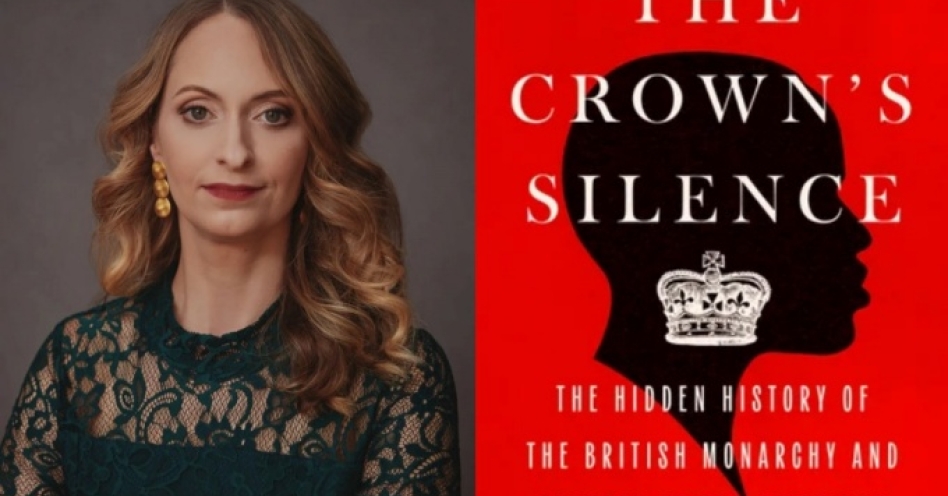
Dr Brooke-Newman
The revelation arrives in an era where several Caribbean nations are actively reassessing their constitutional relationships with the British Monarchy and moving toward becoming republics. In penning ‘The Crown’s Silence’, historian Dr. Brooke N. Newman reveals that from the 1560s to 1807, the British Monarchy did not merely permit the transatlantic slave trade - they directly invested in it, designed it, and amassed vast royal wealth from the labour of millions of enslaved Africans. This holds incredible merit in today’s society as the African Union officially launches its historic ‘Decade on Reparations (2026-2026)’ with the intention to intensify demands for reparatory justice.
The landmark new book has fundamentally shifted the global legal and political ground as Professor Newman exposes actual financial receipts from the royal archives that strengthened her claim while answering centuries-old questions about Britain’s claim to just be a benefactor and not an architect of slavery.
Old Harbour News recently spoke with the acclaimed author about her new body of work and its compelling new findings. According to Newman, the evidence, specifically the financial receipts, was in the royal archives among other places all along. “The evidence was never in a single archive waiting to be discovered. It was scattered across multiple archival collections: state papers, the records of the Royal African Company and the South Sea Company, the papers of government officials and abolitionists, the archives of the West India Lobby, and the Royal Archives and Royal Collections, among others. What’s been missing is not the evidence itself but the effort to connect these records into a continuous historical account of the monarchy’s involvement in slavery over the centuries,” said Dr Newman.
Drawing on extensive, newly examined archives and manuscripts from the Royal African Company, the South Sea Company, the Royal Navy, and colonial officials, Dr Newman dismantles Britain’s long-standing defence that colonial slavery was strictly the work of private enterprises. Instead, the book presents undeniable archival proof that the Crown was an active architect, investor, and financial beneficiary of the Caribbean slave system.
For Caribbean nations and their diaspora communities, this book serves as critical new evidence. By establishing direct Crown complicity, Newman’s findings fundamentally undermine the moral and legal shields London has historically relied upon to resist financial and structural accountability.
‘The Crown’s Silence’ also comes at a critical geopolitical turning point with a global framework as the African Commission on Human and Peoples' Rights has formally declared the AU Decade on Reparations (2026–2036), running alongside the UN Second International Decade for People of African Descent. Add to this CARICOM’s legal advocacy, where their movement has evolved from academic debate into active state-led demands. This 10-point plan for reparatory justice includes formal apologies and debt cancellation; thus, there are many initiatives which simultaneously push renewed urgency with these newly exposed historical receipts.
“What this means is that advocates for reparation now have a stronger documentary foundation for their arguments. The historical record demonstrates sustained institutional links between the British monarchy and the machinery of slavery and colonial exploitation. The wealth of evidence makes it increasingly difficult to argue that these connections are speculative or unknown. The conversation around reparations can—and should—now move beyond whether these relationships existed, to what meaningful acknowledgement, accountability, and repair should look like today,” she said.
As Newman demonstrates, centuries of royal silence have only deferred an inevitable reckoning. ‘The Crown's Silence’ proves that contemporary demands for reparations are not new claims, but long-overdue accounts waiting to be settled. To those who simply say to just let the past be the past, Professor Newman counters that the past does not simply disappear with the passing of time. “The legacies of slavery and colonialism remain embedded in contemporary institutions, patterns of wealth, and social and racial inequalities,” Dr Newman explained. “The disparities we see today did not emerge in isolation; they were shaped by historical systems designed to generate enormous wealth for some, while dispossessing and enslaving others. Addressing that history is not about reliving the past. It’s about understanding how it continues to influence the present.”
And for the critics who have stated that nobody alive presently is responsible for the atrocities committed hundreds of years ago, so why continue to make the British government and its people uncomfortable or held accountable for something that they personally did not do, Professor Newman’s take on that line of argument is that accountability is not the same as personal guilt.
“Modern states and institutions inherit both their assets and their histories. The British monarchy is itself based on hereditary succession — its authority, prestige, and wealth are passed from one generation to the next. If institutions can inherit privilege, they can also inherit responsibilities. The question isn’t whether individuals today committed these crimes, but whether institutions that continue to benefit from historical injustices have an obligation to acknowledge that history and participate in efforts to address its enduring consequences,” she said.