Remittances remain important | The challenge is mobilization
Article By: Dr Leo Gilling
-

- Jun 22, 2026 09:10 AM | Commentary
-
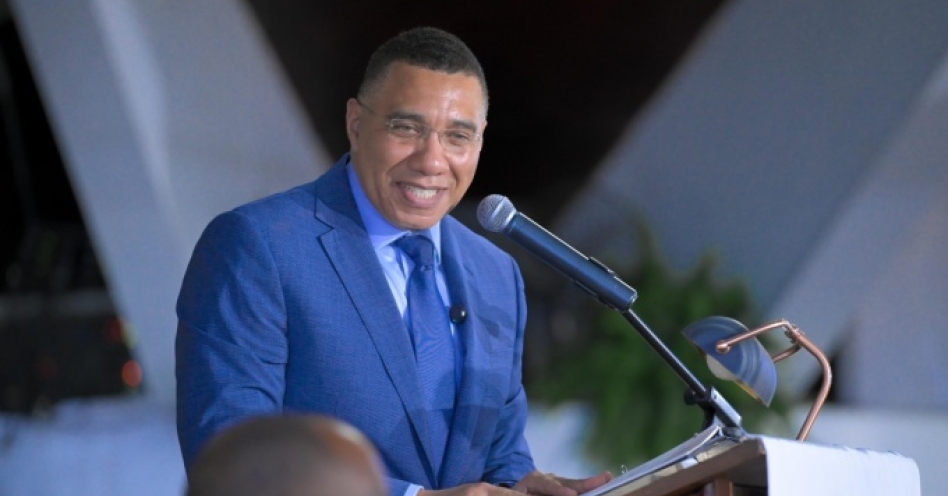
Prime Minister of Jamaica Dr Andrew Holness
That was the question that came to mind when a regular reader recently sent me a copy of a 2017 Caribbean Policy Research Institute (CAPRI) report entitled Economic Value of the Jamaican Diaspora: Successfully Engaging the Diaspora.
Until then, I had been unaware of the study.
The next challenge is understanding the developmental contributions that are far more difficult to measure but may be equally important to Jamaica’s future.
What CAPRI Measured and Why It Matters Today
The CAPRI study Economic Value of the Jamaican Diaspora: Successfully Engaging the Diaspora made an important contribution to the national conversation about diaspora engagement.
For many years, discussions about the Jamaican diaspora often relied on anecdotes, assumptions, and broad statements about remittances and support from Jamaicans living abroad. While there was little doubt that the diaspora played an important role in Jamaica’s development, there was less clarity regarding the scale and scope of that contribution.
CAPRI helped move the conversation beyond assumptions by quantifying many of the ways the diaspora contributes to Jamaica’s economy.
The findings confirmed what many had long suspected.
Remittances matter.
Diaspora tourism matters.
Philanthropy matters.
Investment matters.
Trade and business activity matter.
Collectively, these contributions generate employment, stimulate consumption, strengthen foreign exchange earnings, support families, and contribute significantly to national development.
In many respects, the report provided empirical evidence for what Jamaicans at home and abroad had long observed. The diaspora is not simply a source of remittances. It is a significant economic actor whose contributions extend across multiple sectors of national life.
These findings matter because what gets measured often receives attention. By quantifying diaspora contributions, CAPRI strengthened the evidence base for policy discussions and provided a clearer understanding of the economic relationship between Jamaica and its overseas communities.
Yet one of the most interesting aspects of the report may be what its findings imply beyond the numbers.
While CAPRI was designed to measure economic contributions, the profile of the diaspora that emerged from the research suggests something larger. The report describes a diaspora that is highly educated, professionally accomplished, emotionally connected to Jamaica, and interested in contributing to national development.
That observation deserves careful consideration.
Behind every remittance is a person.
Behind every philanthropic contribution is a relationship.
Behind every investment decision is experience, expertise, knowledge, professional networks, and leadership capacity.
Viewed through that lens, the report may have identified more than an economic resource. It may have identified one of Jamaica’s largest reservoirs of human capital.
That possibility becomes particularly important today as Jamaica increasingly discusses labour shortages, skills gaps, talent attraction, productivity, and economic competitiveness.
Recent comments by Prime Minister Andrew Holness regarding Jamaica’s need to become an importer of talent make CAPRI’s findings even more relevant. If Jamaica now acknowledges the need for skilled workers to strengthen industries, improve productivity, and support economic growth, then CAPRI may have answered an important question nearly a decade ago.
The report identified a global community of Jamaicans possessing many of the skills, qualifications, professional experiences, leadership capacities, and networks that Jamaica now says it requires.
For years, discussions about the diaspora have often centered on remittances, philanthropy, investment, and tourism. Those contributions are important and should continue to be recognized. However, CAPRI’s findings suggest that the Jamaican diaspora is far more than a source of financial support.
It represents one of Jamaica’s largest and most significant strategic assets.
Unlike many national assets, however, this asset exists beyond Jamaica’s borders. It is dispersed across multiple countries, professions, industries, institutions, and sectors. It cannot be extracted from the ground. It cannot be purchased. It cannot be imported in the traditional sense.
It must be engaged, organized, mobilized, and connected to national priorities through deliberate and intentional systems.
The report paints a picture of a diaspora rich in financial capital, human capital, intellectual capital, professional capital, social capital, and relationship capital.
These forms of capital are interconnected.
A physician may bring medical expertise, professional networks, research relationships, and mentorship opportunities.
An educator may bring instructional knowledge, leadership experience, institutional partnerships, and professional development capacity.
An entrepreneur may bring investment capital, market knowledge, international relationships, and business expertise.
A researcher may bring innovation, collaborative opportunities, and access to global knowledge networks.
Collectively, these assets represent a reservoir of talent that few countries have the privilege of possessing.
Yet as I read its findings, I found myself repeatedly returning to the same conclusion.
Nearly a decade ago, CAPRI identified many of the same strengths, opportunities, and challenges that members of the Jamaican diaspora have been discussing for years.
More importantly, the report may have revealed something Jamaica still has not fully acted upon.
Over the past several months, I have written extensively about the Jamaican diaspora, diaspora engagement, intellectual remittances, philanthropy, and national development. My perspective has never been shaped solely by theory or research. It has been shaped by lived experience at the intersection of diaspora development, education, and criminology.
For more than three decades, I have worked with diaspora organizations, educators, institutions, community leaders, policymakers, and volunteers on initiatives designed to strengthen educational capacity, build partnerships, and support national development. Through that work, I have observed how members of the diaspora contribute their time, expertise, relationships, resources, and professional experience to Jamaica and to their overseas communities.
Much of what I have written over the years has been based on those observations.
It has been informed by experience, practice, and the relationships developed through that work.
As I continued reading the CAPRI report, I realized that many observations emerging from decades of diaspora engagement had already been captured in research. The report confirmed much of what members of the diaspora have been saying for years. It validated the idea that the diaspora represents a significant national asset whose contributions extend far beyond remittances.
At the same time, the report raised a broader and perhaps more important question.
If CAPRI identified a diaspora that was highly educated, professionally accomplished, emotionally connected to Jamaica, and interested in contributing to national development nearly a decade ago, what has Jamaica done with that information?
This article is therefore not intended as a review of the CAPRI report.
Rather, it is an examination of what the report measured, what it did not measure, what its findings may imply today, and what Jamaica may need to build if it hopes to fully leverage the capabilities, expertise, relationships, and developmental potential of its diaspora.
CAPRI measured the economic value of the diaspora.
What the report also revealed, perhaps unintentionally, was the existence of a much larger developmental asset.
Behind the remittances were educators, physicians, researchers, entrepreneurs, engineers, academics, technologists, community leaders, and professionals whose knowledge, expertise, networks, and leadership experience represented a form of national capital that remains largely untapped.
The report quantified economic contributions.
Click here to continue reading
Dr. Leo Gilling is a criminologist, educator, and diaspora policy advocate. He writes The Gilling Papers, where he examines policing, public safety, governance, and community-based solutions in Jamaica and across the African diaspora. Send feedback to editorial@oldharbournews.com